Ranked by MissedTakes Score — how much better than a naive guess, not how often right. Someone who only ever picks the favorite lands near zero however high their accuracy climbs, which is the whole point of measuring it this way. The methodology explains the arithmetic. There is a ranking of publishers too, for when the byline is a masthead rather than a person.
Anyone with fewer than ten graded articles is left out of the numbered ranking. Thirty picks in one mock draft is one article, not thirty opinions, and counting it as thirty would be the quickest way to look established without having been tested.
Pundits tracked
760
302 awaiting a first graded take
Ranked
40
ten graded articles or more
Building a record
418
Graded takes
10,067
behind these numbers
The ranking
NFL pundits with ten or more graded articles, ranked by MissedTakes Score
Everyone with a score, ranked or not. Zero means no better than a naive guess on the same claims — a pundit can be accurate and still land below it, if the calls were easy.
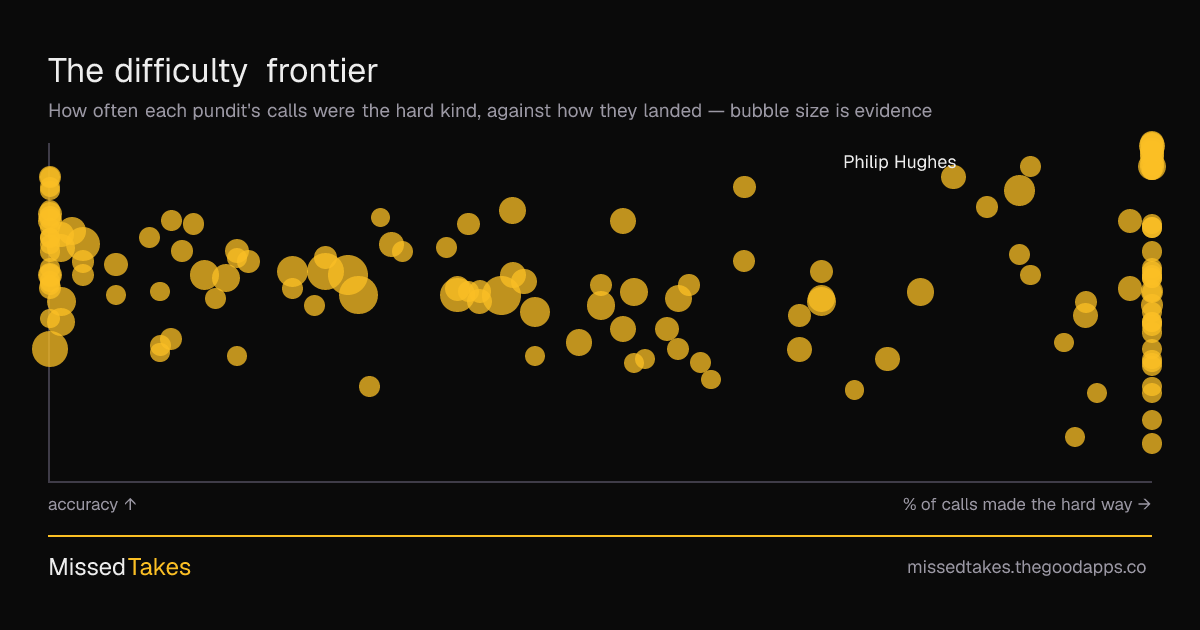
How often each pundit's calls were the hard kind — long odds, long lead — against how they landed. Up and to the right is bold AND right; accuracy alone can be bought by only ever picking favorites, which is the corner this chart exposes.
The clarity league
What share of each pundit's claims were specific enough to ever be checked. 'Could be a sneaky playoff team' grades nothing and counts here; a named number counts everywhere else on this site.
Perfect clarity · 96 punditsevery graded claim was specific enough to check
Ordered by how much evidence there is, not by score — these samples are too thin to rank, and sorting them by result would be a ranking with a disclaimer on it.
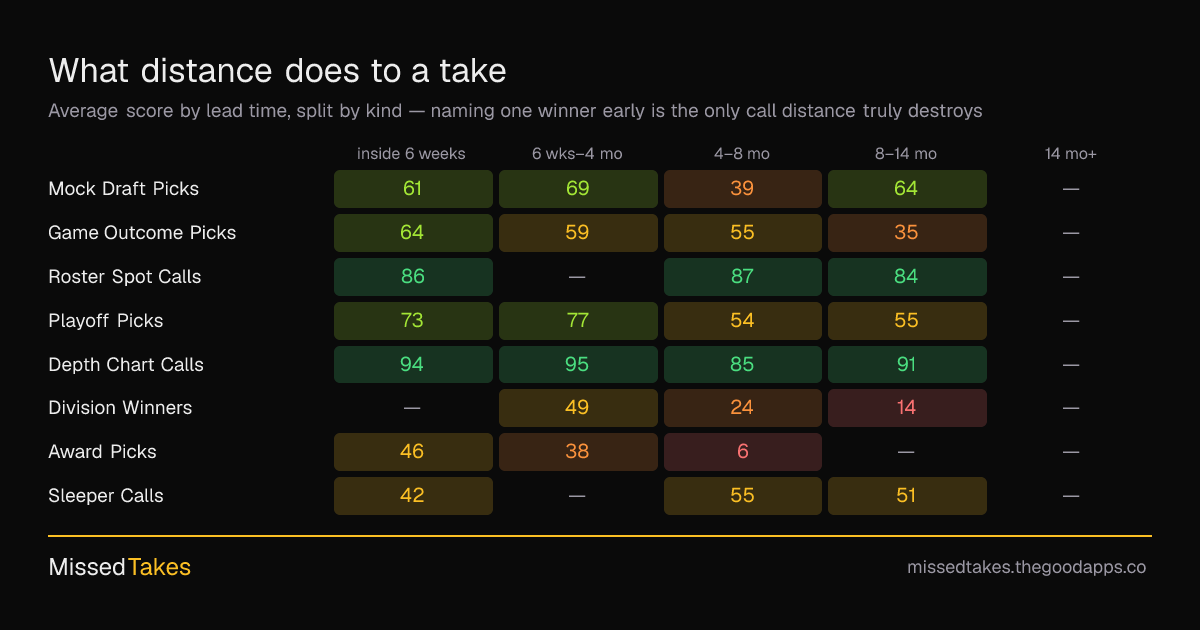
Average score by how far ahead of the season's end the call was made, split by kind. The lead-time effect is real but selective: naming ONE winner months out — an award, a champion — grades near zero and only becomes a fair fight close in, while structural calls like depth charts are as safe in July as in January, and most kinds barely move at all. An earlier version pooled these rows and read like clairvoyance improves with distance; that was the mix of claim kinds shifting with the calendar, and it is the trend this chart no longer invents.
MissedTakes Score is how much better than a naive guess on the same claims — zero means no better, and it is the column the rank is built on. Accuracy is the average score of their graded calls out of 100, with no credit for difficulty. Graded is how many of their claims have been settled against real results — the evidence behind the other two.
“Score” weighs the evidence behind it, so one perfect article can’t sit above sixteen graded ones — “Raw score” is the same number sorted with no such weighting.
Everyone with ten or more graded calls. Bubble size is evidence, and the dot’s color blends the two axes — bluer means safer calls, golder means harder, brighter means more of them landed. Hover any point for its numbers, click through for the record behind it.